How to Choose a Biomass Pellet Machine for Industrial Production ?
Buying a biomass pellet machine is a bigger decision than most first-time buyers expect. Get the capacity, raw material compatibility, or die configuration wrong, and you're either stuck with a machine that can't keep up with demand or one that's burning through electricity and maintenance budget for no reason.
We manufacture biomass wood pellet machines in Pune, and over the years we've seen the same buying mistakes repeat across industries — agriculture, forestry waste processing, and industrial pellet production alike. This guide walks through exactly what to evaluate before you commit to a machine, so you spend on capacity you'll actually use.
What Is a Biomass Pellet Machine ?
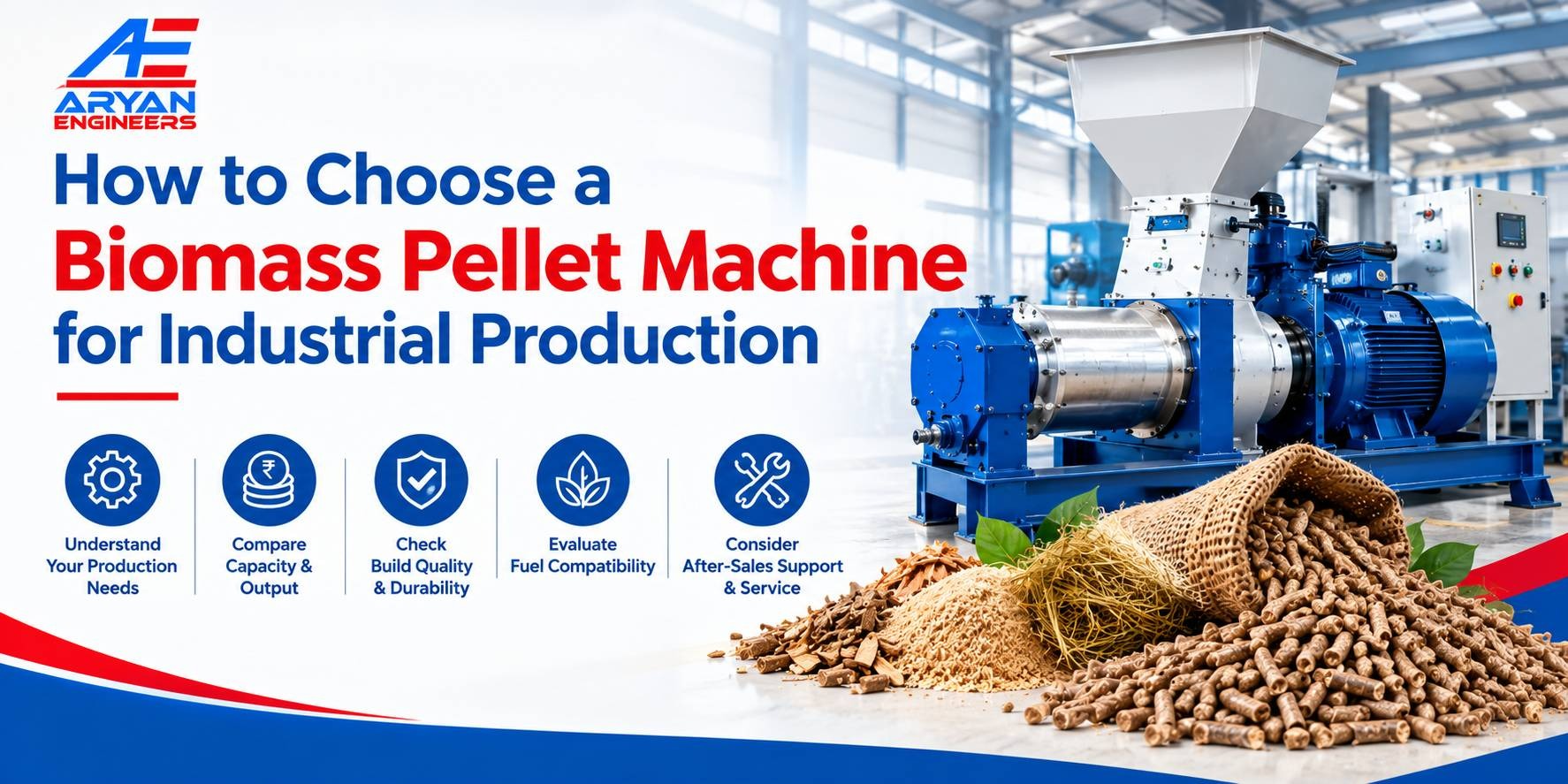
A biomass pellet machine is an industrial device that compresses biomass materials — such as sawdust, wood chips, straw, or agricultural residue — into dense, uniform pellets used as renewable fuel. The machine applies heat and pressure through a die, forcing raw material through small holes to form compact pellets typically 6mm to 12mm in diameter.
These pellets are then used across a wide range of applications: industrial boiler fuel, power plant feedstock, pellet stoves for heating, animal bedding, and even organic fertilizer production.
Why Getting the Right Machine Matters ?
Before comparing models, it helps to understand what's actually at stake in this decision :
- Undersized machines can't meet production targets, forcing costly upgrades within a year or two.
- Oversized machines tie up capital and increase power consumption without a corresponding output need.
- Wrong die configuration for your raw material leads to poor pellet quality, higher jamming frequency, and increased downtime.
- Ignoring raw material moisture content during sourcing is one of the most common — and most expensive — oversights we see.
Common Mistake We See in the Field
Buyers frequently size a machine based on their current raw material supply without checking moisture content variability across seasons. A machine rated for 500 kg/hr on dry sawdust can drop well below that on damp monsoon-season feedstock. Always ask your supplier to quote capacity ranges across expected moisture variation, not a single best-case number.
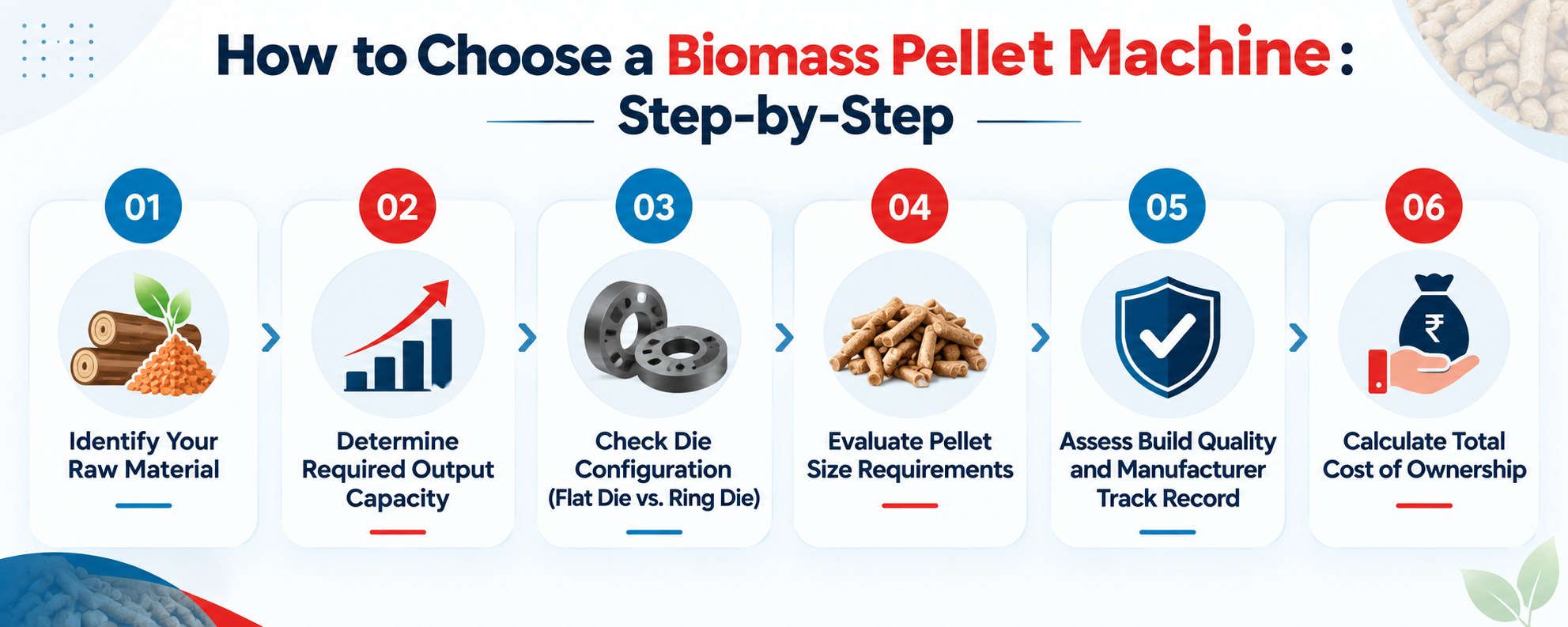
How to Choose a Biomass Pellet Machine : Step-by-Step ?
Step 1: Identify Your Raw Material
Different machines are built to handle different feedstock. Confirm your machine can process what you actually have available :
- Wood chips and sawdust
- Straw and grass
- Corn stalks and rice husks
- Other agricultural residues
As a rough guide, it typically takes about 1.5 to 2 tons of raw biomass to produce one ton of finished pellets, depending on moisture content and material density — factor this into your raw material sourcing plan before finalizing machine capacity.
Step 2: Determine Required Output Capacity
Calculate your target daily or hourly pellet output based on :
- Downstream use (boiler fuel demand, resale volume, etc.)
- Operating hours per day
- Seasonal raw material availability
Buy for your peak realistic demand, not your average — undersizing is the single most common regret we hear from repeat customers who upgraded within 18 months of their first purchase.
Step 3: Check Die Configuration (Flat Die vs. Ring Die)
- Flat die machines - generally more affordable, suited to smaller-scale or intermittent production.
- Ring die machines - built for continuous, higher-volume industrial output, with better durability under sustained load.
Match the die type to your production volume and duty cycle, not just your budget — a flat die machine pushed to continuous industrial-scale output will wear out significantly faster than it's rated for.
Step 4: Evaluate Pellet Size Requirements
Most biomass pellet machines produce pellets ranging from 6mm to 12mm in diameter. Confirm your intended end use — industrial boiler fuel, stove fuel, or animal bedding — has a specific size requirement before finalizing your machine's die specification.
Step 5: Assess Build Quality and Manufacturer Track Record
Ask about :
- Years in operation and industrial client base
- Materials used in the pelletizing chamber and die
- After-sales support and spare parts availability
- Installation and commissioning support
Step 6: Calculate Total Cost of Ownership
Don't evaluate machines on purchase price alone. Factor in :
- Power consumption per ton of pellets produced
- Expected die and roller replacement frequency
- Maintenance and service costs
- Raw material sourcing and pre-processing costs (drying, chipping)
Benefits of Choosing the Right Biomass Pellet Machine
Getting this decision right pays off well beyond the purchase itself :
- Sustainability - Reduces reliance on fossil fuels and lowers greenhouse gas emissions.
- Efficiency - Correctly sized machines burn cleaner and produce less ash per unit of output.
- Economic return - Converts wood waste and agricultural residue into a sellable or usable fuel product.
- Waste reduction - Helps forestry, agriculture, and manufacturing operations turn waste streams into revenue.
- Consistent output - Well-matched raw material and die configuration means fewer jams and less downtime.
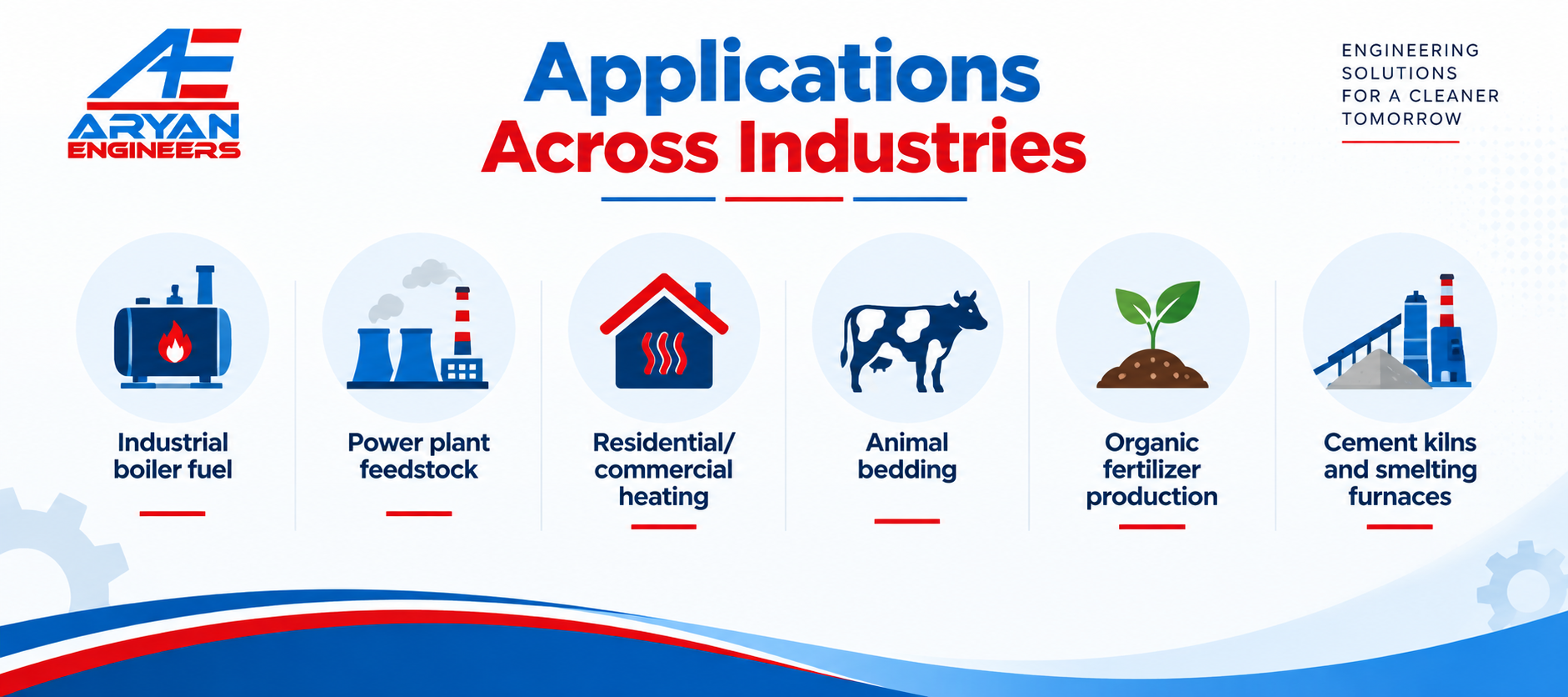
Applications Across Industries
Biomass pellet machines serve a wide range of production needs :
| Application | Typical Buyer |
|---|---|
| Industrial boiler fuel | Food processing, textile, chemical plants |
| Power plant feedstock | Renewable energy operators |
| Residential/commercial heating | Pellet stove and fireplace suppliers |
| Animal bedding | Livestock and poultry farms |
| Organic fertilizer production | Agricultural cooperatives |
| Cement kilns and smelting furnaces | Heavy industrial processors |
Why Choose Aryan Engineers as Your Biomass Pellet Machine Manufacturer ?
We're a Pune-based manufacturer with close to a decade of experience producing biomass pellet machines, wood pellet burners, and related industrial equipment. Our clients range from small-scale agricultural setups to large industrial operations, and our machines are built with quality materials and tested for continuous-duty performance.
- Manufacturer with nearly a decade of industrial engineering experience
- Machines built for both small-scale and large industrial production
- Premium materials with strict quality control at every production stage
- Installation guidance and after-sales support included
- Trusted by a growing base of industrial and agricultural clients across India
If you're comparing biomass pellet machine manufacturers in India, we'd recommend starting with a conversation about your raw material and output targets — that's what actually determines the right machine, not a spec sheet in isolation.
Talk to our team about your production requirements →Conclusion
Choosing the right biomass pellet machine comes down to matching raw material, output capacity, and die configuration to your actual production needs — not the biggest or cheapest option on a supplier's list. Buyers who take the time to size correctly upfront avoid the two most common regrets we see: undersized machines that can't scale, and oversized machines that never earn back their capital cost.
If you're evaluating a biomass wood pellet machine for industrial production, our engineering team can walk you through sizing based on your specific raw material and volume targets.
Request a consultation and quote →
FAQ : Frequently Asked Questions
A biomass pellet machine compresses raw materials like sawdust, wood chips, and agricultural residue into dense pellets used as renewable fuel for industrial boilers, power plants, heating stoves, and even animal bedding.
Most biomass pellet machines can process wood chips, sawdust, straw, grass, corn stalks, rice husks, and other agricultural residues, though feedstock compatibility varies by machine model.
On average, it takes about 1.5 to 2 tons of raw biomass to produce one ton of finished pellets, depending on the material's moisture content and density.
Most industrial biomass pellet machines produce pellets ranging from 6mm to 12mm in diameter, depending on the die configuration and end-use requirements.
Flat die machines suit smaller-scale or intermittent production and cost less upfront, while ring die machines are built for continuous, high-volume industrial output and offer better durability under sustained load.
With proper maintenance, a biomass pellet machine can operate reliably for several years — actual lifespan depends on build quality, usage frequency, and how consistently it's serviced.