Biomass Pellet Burner for Boiler: Working, Benefits & Applications
If you're running an industrial boiler on diesel, furnace oil, or coal, you already know the pain — rising fuel bills, unpredictable prices, and constant pressure to cut emissions. A biomass pellet burner for boiler systems is one of the most practical ways to solve all three problems at once, and it's why so many food processing, chemical, textile, and pharmaceutical units across India are making the switch.
We manufacture biomass wood pellet burners for industrial and commercial boilers, and in this guide, we'll walk you through exactly how they work, what fuel they use, what benefits you can expect, and whether one can realistically replace your existing diesel burner.
What Is a Biomass Pellet Burner for a Boiler ?
A biomass pellet burner for a boiler is a combustion device that burns compressed biomass pellets — usually made from wood waste, agricultural residue, or sawdust — to generate heat for a boiler's furnace. It replaces or retrofits onto existing diesel, furnace oil, or coal-fired boiler systems, converting stored fuel energy into consistent, controllable heat.
Unlike a standalone stove, a pellet burner is engineered to integrate directly with a boiler's combustion chamber, feeding fuel automatically and maintaining a steady flame for continuous industrial operation.
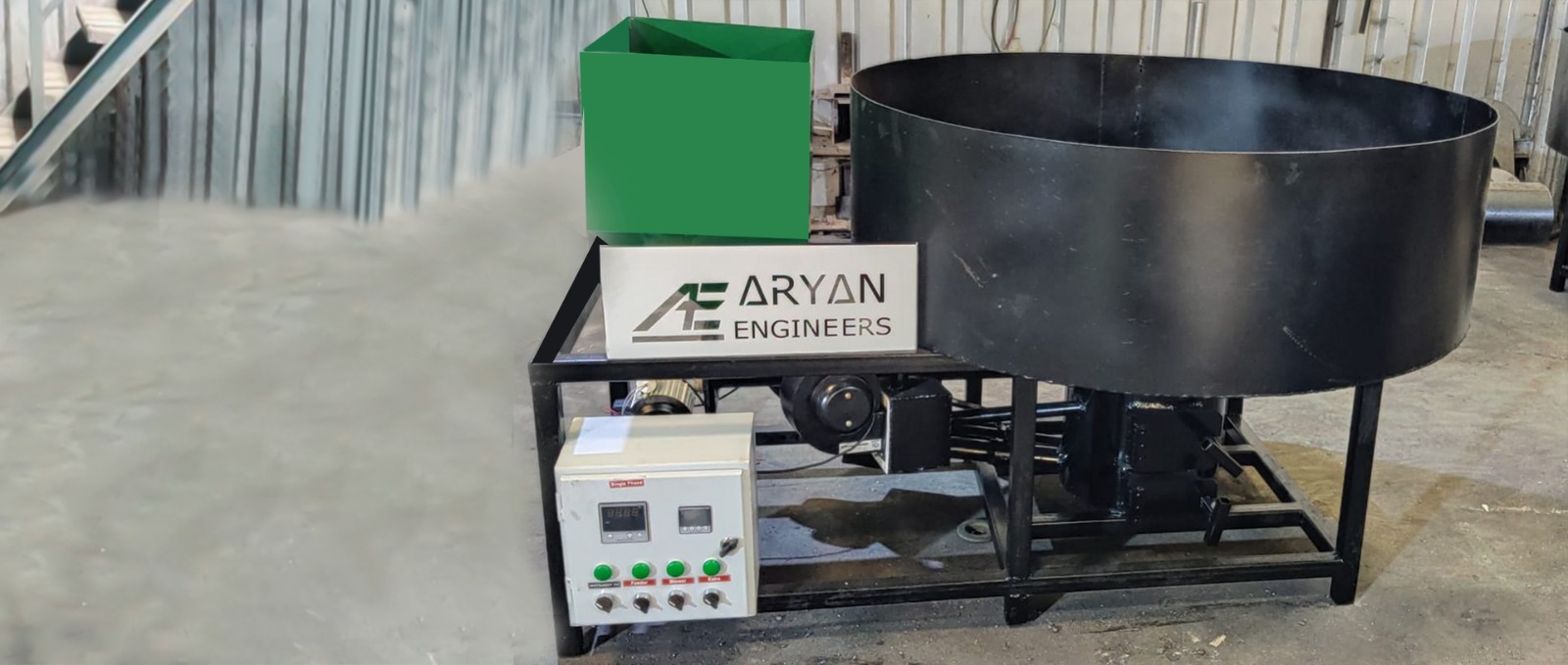
Key components typically include :
- A fuel storage hopper
- An auger or screw-feed mechanism
- An ignition system (automatic or manual)
- A combustion chamber matched to boiler specifications
- A control panel for feed rate and air supply
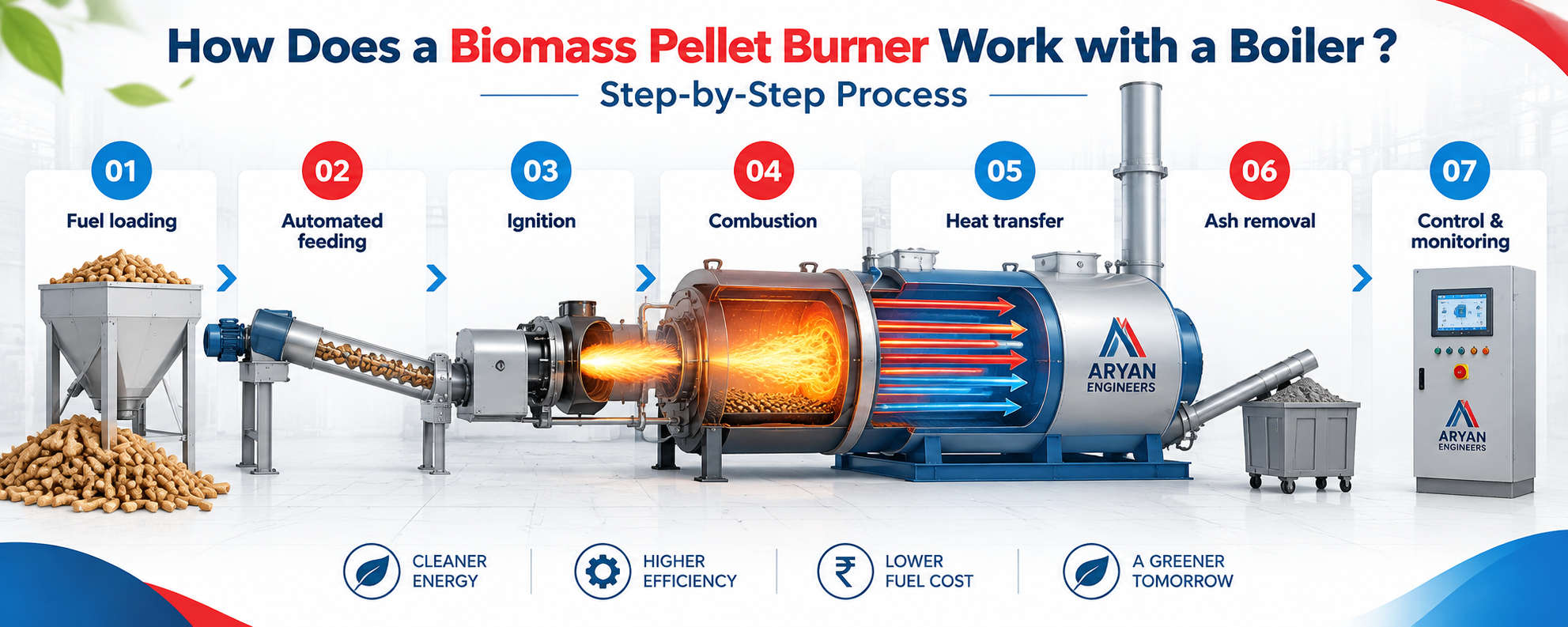
How Does a Biomass Pellet Burner Work with a Boiler ?
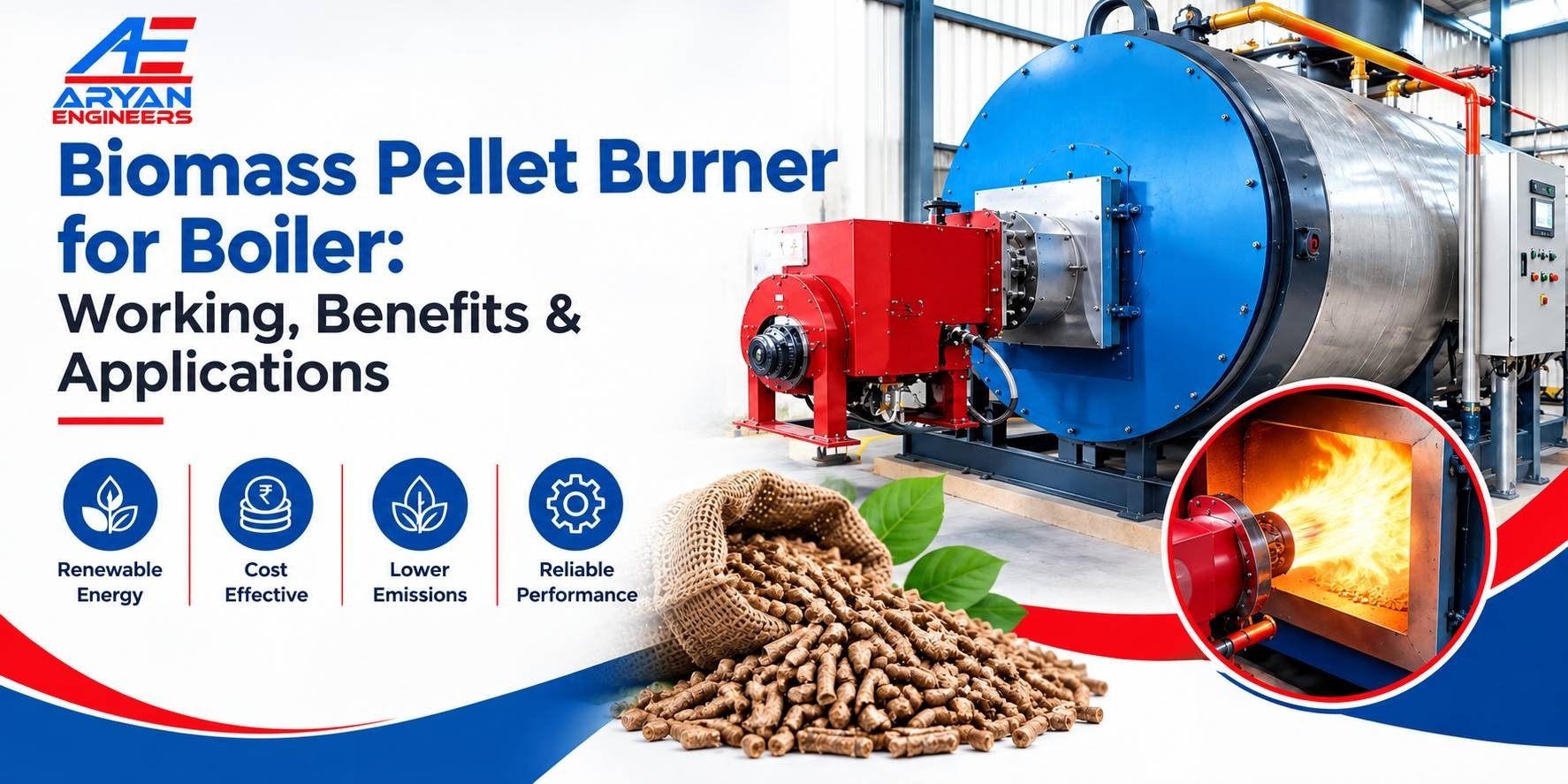
A biomass wood pellet burner works by automatically feeding compressed pellets from a storage hopper into a combustion chamber, where they're ignited and burned at high temperature. The resulting heat is transferred into the boiler's water or thermal fluid system, exactly the way a diesel or coal burner would — just with a cleaner, renewable fuel source.
Step-by-Step Process
- Fuel loading - Wood pellets are loaded into the storage hopper, either manually or via a bulk feed system.
- Automated feeding - A screw conveyor (auger) transports pellets from the hopper to the burner's combustion chamber at a controlled rate.
- Ignition - An automatic igniter (electric or hot-air) lights the pellets; some systems use a pilot flame for continuous restart capability.
- Combustion - Pellets burn in a controlled air-to-fuel ratio, producing consistent heat with minimal smoke and ash.
- Heat transfer - Combustion heat is directed into the boiler's heat exchanger, converting water to steam or heating thermal oil.
- Ash removal - Residual ash (typically under 1–2% of fuel weight) is collected in an ash tray or automated ash removal system for easy disposal.
- Control & monitoring - A control panel regulates feed rate, air supply, and temperature to match boiler load demand automatically.
This automation is what makes pellet burners practical replacements for manually-fed coal or diesel systems — once installed, they require far less operator intervention.
What Fuel Is Used in a Biomass Pellet Burner ?
A biomass pellet burner runs on compressed pellets made from renewable organic material — most commonly wood waste, sawdust, agricultural residue (like husk or straw), or bagasse. These pellets are compressed to a standard size and moisture content, giving them a predictable, high calorific value compared to loose biomass.
| Fuel Type | Typical Calorific Value | Notes |
|---|---|---|
| Wood pellets (sawdust-based) | 4,000–4,500 kcal/kg | Most widely used, consistent burn |
| Agro-waste pellets (husk, straw) | 3,200–3,800 kcal/kg | Lower cost, regionally available |
| Bagasse pellets | 3,500–4,000 kcal/kg | Common in sugar-processing regions |
Practical tip from field experience : fuel moisture content matters more than most buyers expect. Pellets above 12–14% moisture reduce combustion efficiency and increase ash buildup — always check moisture specs with your fuel supplier before bulk purchase.
Benefits of Using a Pellet Burner for a Boiler
Switching to a biomass burner for boiler operations delivers measurable advantages across cost, compliance, and reliability :
- Lower fuel costs - Businesses commonly save up to 40% on energy bills compared to diesel or furnace oil.
- Renewable, stable-priced fuel - Wood pellets aren't tied to volatile crude oil pricing.
- Cleaner combustion - Significantly reduced smoke and particulate emissions compared to coal.
- High efficiency - Well-designed systems achieve over 90% combustion efficiency.
- Lower maintenance - Fewer moving parts than complex oil-fired burner assemblies.
- Regulatory advantage - Easier compliance with tightening industrial emissions norms.
- Automation-ready - Auger feed systems reduce manual labor compared to coal-fired boilers.
Common Mistake We See in the Field
Many first-time buyers undersize the burner to save upfront cost, then find it can't meet peak boiler load during high-demand shifts. We always recommend sizing the burner to your boiler's maximum rated capacity, not just average daily load — it costs less to spec correctly upfront than to retrofit later.
Can a Biomass Pellet Burner Replace a Diesel Burner ?
Yes, a biomass pellet burner can replace a diesel burner in most industrial boiler setups, provided the boiler's combustion chamber and heat exchanger are compatible or retrofitted accordingly. The conversion typically pays back its cost within 12–24 months through fuel savings alone, depending on daily operating hours and local diesel pricing.
What the replacement process usually involves :
- Technical assessment of existing boiler specifications
- Burner sizing based on boiler's rated thermal output
- Combustion chamber modification (if required)
- Installation of fuel storage and auger feed system
- Commissioning and performance testing
That said, replacement isn't always a straight swap — boilers originally designed for oil firing sometimes need chamber modifications to handle solid-fuel combustion characteristics. A proper site assessment before purchase avoids costly surprises after installation.
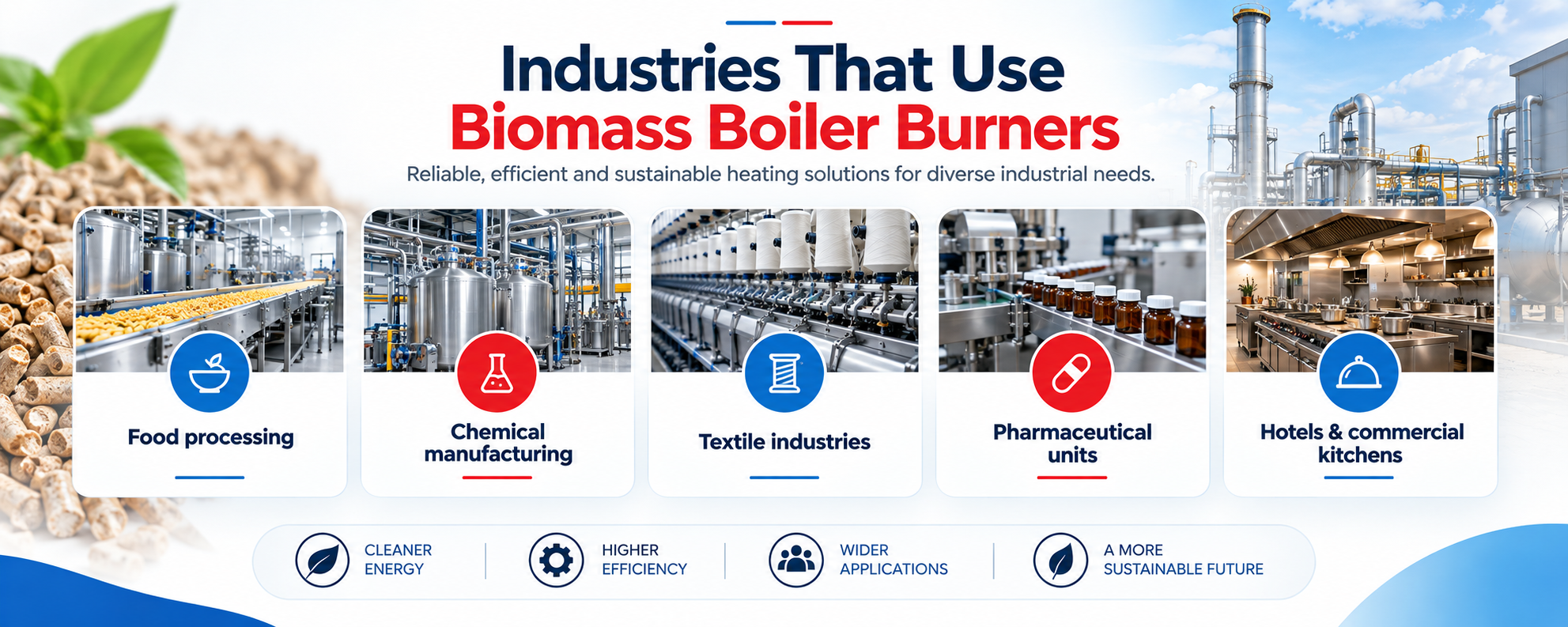
Industries That Use Biomass Boiler Burners
Industrial biomass pellet burners are widely used across :
- Food processing - steam generation for cooking, sterilizing, and drying
- Chemical manufacturing - process heat for reactors and dryers
- Textile industries - dyeing, steaming, and finishing processes
- Pharmaceutical units - sterilization and controlled-temperature processes
- Hotels & commercial kitchens - hot water and steam generation
Why Choose Aryan Engineering for Your Biomass Pellet Burner ?
We're an industrial manufacturer based in Pune, Maharashtra, specializing in biomass wood pellet burners, wood pellet machines, and related industrial heating equipment. Our burners are built with premium-grade materials, tested for continuous industrial duty, and available in multiple capacities to match different boiler sizes.
- Trusted manufacturer serving industrial and commercial clients across India
- Custom-built burners matched to your boiler's exact specifications
- Professional installation guidance and after-sales support
- Competitive pricing with long-term fuel savings for your business
If you're evaluating a switch from diesel, furnace oil, or coal to a cleaner biomass burner for boiler operations, our team can assess your existing setup and recommend the right burner capacity for your load requirements.
Conclusion
A biomass pellet burner for boiler systems isn't just an environmental upgrade — it's a practical fuel-cost decision backed by real operating data across food processing, textile, chemical, and pharmaceutical industries. Whether you're retrofitting an existing diesel-fired boiler or specifying a new industrial biomass boiler burner, getting the sizing, fuel spec, and combustion chamber compatibility right from day one determines how much you actually save.
If you're weighing a wood pellet burner for boiler conversion, our team at Aryan Engineering can walk you through a site assessment and burner sizing specific to your operation.
Talk to our engineers about your boiler conversion →FAQ : Frequently Asked Questions
A biomass pellet burner for a boiler is a combustion system that burns compressed wood or agro-waste pellets to generate heat for an industrial or commercial boiler, replacing diesel, furnace oil, or coal as the primary fuel source.
It feeds pellets automatically from a storage hopper into a combustion chamber via an auger, ignites them, and transfers the resulting heat into the boiler's water or thermal fluid system — the same basic function as a diesel burner, but running on renewable fuel.
Most biomass pellet burners run on wood pellets, though agro-waste pellets (husk, straw) and bagasse pellets are also common depending on regional fuel availability.
Yes, in most cases. The boiler's combustion chamber may need minor modification, but the fuel savings — often up to 40% — typically pay back the conversion cost within 12–24 months.
No. Compared to coal-fired systems, biomass pellet burners have fewer moving parts, produce less ash, and require simpler routine maintenance — mainly ash removal and periodic feed-system checks.
Well-designed industrial biomass pellet burners can achieve over 90% combustion efficiency, comparable to or better than many diesel-fired systems, while cutting fuel costs significantly.